Step 4 of 4
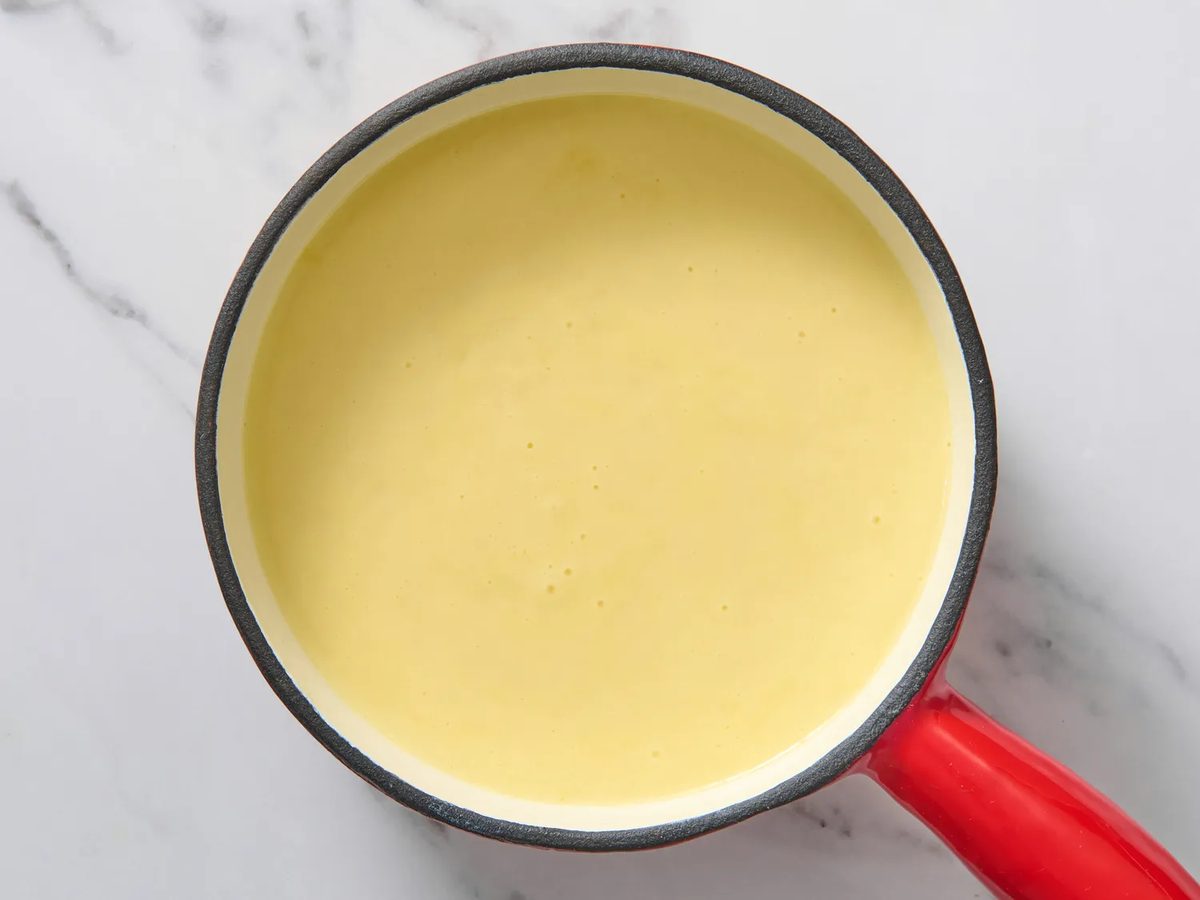
Pour the molten cheese blend into a fondue vessel. Maintain warmth by keeping it over a low flame.
Recipe Reviews
I frequently encounter trouble with the cheese failing to emulsify completely. It doesn't impact the taste, just the presentation. I love creating homemade fondue in the autumn or for holidays like Christmas or Thanksgiving for myself and my loved ones. I pair it with roasted vegetables like Brussels sprouts, green beans, Romano beans, artichoke hearts, pickled asparagus, and multigrain breadsticks. (If you don't want to bake your own, try Dave's Killer Bread.) I think this would also be fantastic over small potatoes with bacon bits. I read that a squeeze of lemon juice can assist with integration. I used Beecher's cheddar, Jarlsberg, and Emmentaler. I have used the other two previously with success when combined with Gruyère, but this particular combination tasted even better. I use an inexpensive Sauvignon Blanc from Trader Joe's and finely mince some garlic into it, though that can also affect the smoothness. Dusting your grated cheese with flour before gradually adding it to the boiling liquid is key to achieving a thick, creamy consistency. I don't use butter, as I've never heard of that before. I do finish it with a sprinkle of nutmeg and add sea or Himalayan salt to taste. Kirschwasser is usually incorporated into the boiling liquid before the cheese, but I cannot personally detect its flavor. If you cannot taste it, or the nutmeg, feel free to omit them. Unless your cheddar is very salty, or you used salted butter, you must add salt or you won't taste the subtle notes.
It is so simple to prepare and offers such a deep, rich flavor. My friends were impressed—if only they knew how uncomplicated it actually is.
Simple to prepare and tasty!